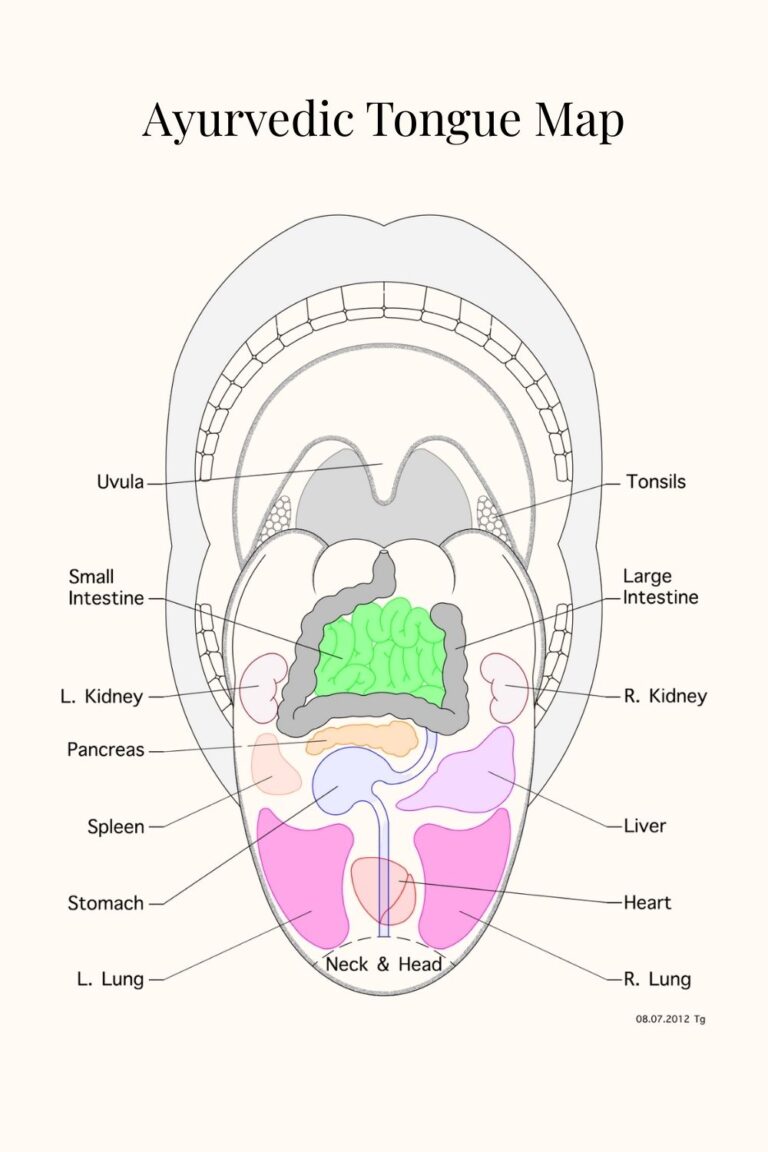
In Ayurveda, the tongue is more than just a muscle for taste—it is a mirror of your inner health. Each morning, before sipping water or brushing your teeth, one of the most insightful rituals you can practice is simply opening your mouth and observing your tongue.
This ancient diagnostic tool allows you to glimpse what’s happening in your digestion, organs, and doshic balance. By learning to “read” your tongue, you can catch imbalances early and adjust your lifestyle before they manifest into deeper health concerns.
Why the Tongue Matters in Ayurveda
The tongue is connected to every major organ system in the body through energetic pathways. Just as a tree reveals the health of its roots by the quality of its leaves, your tongue reflects the state of your inner terrain—your agni (digestive fire), ama (toxins), and the balance of your doshas (Vata, Pitta, Kapha).
Daily observation of your tongue becomes a ritual of self-awareness. It helps you stay attuned to the subtle shifts in your body so you can align with balance before disease sets in.
What to Look For: Key Tongue Indicators
1. Tongue Coating (Ama or Toxins)
A thin, clear coating is natural.
A thick, sticky, or discolored coating signals ama (undigested material) in the body.
White coating = Kapha imbalance (congestion, sluggish digestion).
Yellow/green coating = Pitta imbalance (excess heat, acidity).
Brown/black coating = Vata imbalance (dehydration, dryness, or irregular digestion).
2. Tongue Color (Doshic Balance)
Pink = balanced state of health.
Pale tongue = Vata imbalance (low vitality, anemia, dryness).
Red tongue = Pitta imbalance (heat, inflammation, acidity).
Bluish/purple tongue = Kapha imbalance (sluggish circulation, congestion).
3. Tongue Shape & Impressions
Swollen, with teeth marks = Kapha imbalance (water retention, heaviness).
Thin, small tongue = Vata imbalance (depletion, lack of nourishment).
Inflamed, sharp edges = Pitta imbalance (excess fire, irritability).
4. Cracks, Spots, and Texture
Central cracks = Vata imbalance in the colon or nervous system.
Red spots = Pitta aggravation in specific organs.
Thick cracks with coating = long-term digestive weakness.
Reading Your Daily Doshic Balance
Tongue diagnosis isn’t only about chronic imbalances—it’s also a powerful daily check-in tool. Each morning, your tongue reflects how yesterday’s food, emotions, and lifestyle choices influenced your inner state.
Woke up with a heavy coating? Perhaps last night’s meal was too heavy or late.
Red tongue edges? Stress, alcohol, or spicy foods may have aggravated Pitta.
Dry tongue with cracks? A sign of Vata imbalance from overwork, travel, or skipping meals.
This practice invites you into gentle self-inquiry: What can I shift today to restore harmony?
Ayurvedic Self-Care Ritual: Tongue Scraping
After observation, Ayurveda recommends tongue scraping to remove toxins, freshen the breath, and reset your taste buds. Use a copper or stainless-steel scraper, moving from back to front 7–10 times. This simple act clears ama and supports digestive health.
Your tongue is like a daily health journal—silent but revealing. By paying attention, you can catch early whispers of imbalance and return to harmony through food, lifestyle, and mindfulness.
Ayurveda teaches that true health is not found in perfection, but in awareness and daily course correction. The tongue becomes your ally on this journey, guiding you back to balance every morning.
Ready to go deeper?
If this glimpse into Ayurvedic tongue diagnosis sparks curiosity, imagine what’s possible when you immerse yourself in the full depth of Ayurvedic wisdom. At the Ayurveda Alchemist® Academy, we train future Ayurvedic Health Coaches and Practitioners to master these ancient tools, weaving them into modern practice.
Explore our training programs, retreats, and global community here → Ayurveda Alchemist Academy